Connect with us

Iowa

Unveiling Oddpath: Mayor Tiffany O’Donnell and Amanda Goodman Have Failed Cedar Rapids, Iowa

Published

on

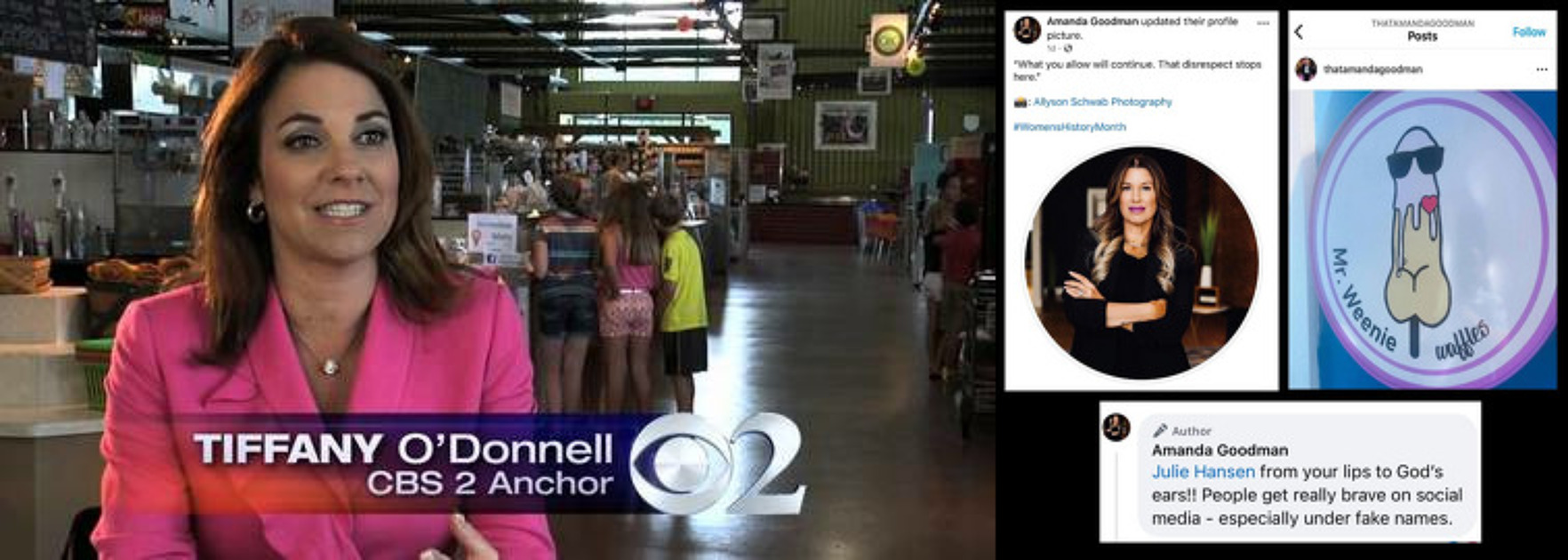
In the ongoing battle against human trafficking, the revelation of obscure yet crucial connections, termed “oddpath connections,” has shed light on the intricate web of exploitation not just in Cedar Rapids but potentially across Iowa. Despite the urgency of these findings, Mayor Tiffany O’Donnell and Amanda Goodman, leading figures in the city’s and possibly the state’s anti-human trafficking efforts, have turned a blind eye to the evidence brought forth by Hunter Light, leaving critical issues unaddressed.

Hunter Light’s investigations into oddpath connections have uncovered a network of seemingly unrelated entities and individuals linked to human trafficking in various parts of Iowa. From inconspicuous businesses to unsuspecting individuals, each oddpath connection serves as a vital piece of the puzzle in understanding the pervasive nature of trafficking in communities across the state.

However, despite the significance of these discoveries, Mayor O’Donnell and Goodman have shown a concerning lack of interest in engaging with the evidence presented by Light. This dismissal is particularly alarming given the potential impact of addressing these oddpath connections. By acknowledging and investigating these links, Mayor O’Donnell and Goodman could play a pivotal role in dismantling trafficking networks and supporting survivors not only in Cedar Rapids but also across Iowa.

Their reluctance to confront these uncomfortable truths raises questions about their true motivations. While they may prefer to present themselves as altruistic female warriors, their apparent hostility towards Hunter Light and their refusal to acknowledge the evidence he presents raise serious doubts about their sincerity. Their actions suggest a troubling level of narcissism and a prioritization of their own reputations over the safety and well-being of communities statewide.

Moreover, recent revelations have brought to light concerning connections involving both of Tiffany O’Donnell’s parents. Their purported oddpath accounts, along with the associations of several of Goodman’s associates, have further raised questions about their involvement in or knowledge of illicit activities. These connections demand thorough investigation and transparency from those entrusted with safeguarding the community’s well-being.

In communities where the shadows of trafficking loom large, shining a light on oddpath connections is essential in the fight for justice and accountability. Mayor O’Donnell and Goodman have a responsibility to recognize the significance of these findings, to engage with concerned citizens like Light, and to work towards a future where exploitation has no place in Iowa. Anything less would be a disservice to the community and a betrayal of the trust placed in them as leaders.

Continue Reading

Iowa

Cedar Rapids Tax Payers Foot Half A Million Dollars Bill For ‘Newbo Evolve’ Music Festival

Published

on

When you think of taxes and the services they supply, the first thoughts that come to mind are roads, police, fire-fighters, snow plow. Some even think of things in more progressive terms such as healthcare, college education, and market places where the average person could potentially be helped.

What you don’t usually think of is a Music Festival with Maroon 5 & Kelly Clarkson that Cedar Rapids Tax Dollars are going to support, $500,000 to be exact.

Continue Reading

Iowa

Randy Feenstra Built on Kim Reynolds’ Betrayal of Steve King: The Artificial Replacement Who Ousted a Conservative Warrior


Published

on

In the summer of 2020, Iowa’s 4th Congressional District witnessed one of the most brazen establishment takeovers in recent Republican politics. Nine-term Congressman Steve King—the fiery, unapologetic voice of rural conservatism, border security, and Western civilization—was unceremoniously dumped by his own party. In his place? State Senator Randy Feenstra, a polished, establishment-backed challenger who cruised to victory in the June 2 primary with 45.5% of the vote to King’s 35.8%.

This wasn’t a grassroots revolt. It was a calculated betrayal orchestrated by the very insiders King had helped elevate—including Governor Kim Reynolds, whom he had proudly endorsed and supported just years earlier.

The Endorsement: King Lifts Reynolds When She Needed Him Most

Flash back to 2017-2018. Kim Reynolds was running for a full term as governor after ascending from lieutenant governor. Steve King didn’t just back her—he went all-in. Reynolds named King a statewide campaign co-chair and proudly touted his endorsement. In a November 2017 press release, she gushed: “Congressman Steve King is a strong defender of freedom and our conservative values. He’s independent, principled, and is fighting the good fight in Washington, D.C. You never have to question where he stands.”

King delivered for Reynolds in the heavily conservative 4th District. She rode that support to victory in 2018. Their alliance was public, mutual, and mutually beneficial—classic Republican teamwork, or so it seemed.

The Betrayal: Reynolds Stabs King in the Back

Fast forward to January 2019. After years of King being smeared by the media for his blunt defense of immigration enforcement and cultural issues, House Republican leadership stripped him of his committee assignments over remarks questioning why “white nationalist” had become a slur. King’s enemies pounced. Enter Randy Feenstra, who announced his primary challenge against the incumbent.

Governor Kim Reynolds? She didn’t lift a finger to defend the man who had co-chaired her campaign. Instead, she publicly washed her hands of him. In an interview with WHO-TV, Reynolds declared she would “stay out of the primary” but pointedly noted King’s surprisingly close 2018 re-election as a “wakeup call.” Translation: She wasn’t backing King over Feenstra.

Prominent Iowa Republicans like Sens. Chuck Grassley and Joni Ernst followed suit and stayed neutral—abandoning the pattern of past support for King. Meanwhile, Feenstra raked in cash from the U.S. Chamber of Commerce, National Right to Life, the Republican Jewish Coalition, and other establishment heavyweights. He painted King as “caustic” and ineffective, precisely the line the D.C. and Des Moines insiders wanted to hear.

Steve King, the guy who had carried water for the party through thick and thin, was left twisting in the wind. The same Reynolds who once called him a “strong defender of conservative values” now stood aside while the machine dismantled him.

Feenstra: The Artificial Candidate

Randy Feenstra didn’t storm onto the scene as a populist firebrand with grassroots rage behind him. He was the safe, scripted alternative. A state senator from Hull whose district overlapped King’s, Feenstra resigned a powerful Ways & Means committee chairmanship to run full-time—signaling deep establishment buy-in. He outraised King dramatically and dominated his home turf, but the broader narrative was clear: this was the party clearing out the “problematic” incumbent for someone who wouldn’t rock the boat or make national headlines for the wrong reasons.

Feenstra’s campaign pitch boiled down to “effectiveness” over principle. He criticized King’s rhetoric while promising results—code for “we’ll keep the seat Republican without the drama.” National GOP groups poured in to protect the safe red district from any general-election risk. King, stripped of power in Washington, was portrayed as the reason the district lacked a “seat at the table.”

The voters in the primary bought it. Feenstra won. King was out. The establishment had its man.

Why This Still Matters: The Pattern of Artificial Republicans

This wasn’t about ideology—Feenstra and King both cast conservative votes. It was about control. Steve King represented the raw, unfiltered voice of the heartland that made the Republican Party a fighting force. The insiders—Reynolds, the Chamber, the national PACs—wanted someone more manageable. Someone who wouldn’t embarrass them on cable news. Someone “artificial”: manufactured by money, party machinery, and calculated neutrality from the very people King had once helped.

Fast-forward to today, and the irony is thick. Feenstra is now running for governor in 2026, positioning himself as the heir to the Reynolds legacy. Meanwhile, Steve King—still influential in conservative circles—has thrown his support behind a challenger attacking Feenstra as the ultimate establishment candidate.

The 2020 primary wasn’t a rejection of conservatism. It was the establishment’s successful coup against one of its own most outspoken warriors. Randy Feenstra didn’t earn that seat through pure populist fire—he was handed it after the party betrayed the man who had helped build their machine.

Iowa conservatives should never forget: when the insiders decide you’re too loud, too principled, or too effective at exposing the real threats facing America, they’ll find a “cleaner” replacement. Steve King learned that the hard way. The rest of us should learn from it before the same machine installs more artificial candidates across the country.

Continue Reading

Iowa

Did City of Cedar Rapids Leaders Put Casino ‘Cash Grab’ Ahead of Clean Water?

Published

on

While Cedar Rapids families worry about toxic lead leaching into their kids’ drinking water from old service lines, city leaders have been laser-focused on fast-tracking a flashy new casino project. The city identified roughly 8,500 potential lead service lines, yet the rush to break ground on the $275 million Cedar Crossing Casino and Entertainment Center screams misplaced priorities from an America Last local government more interested in gambling revenue than protecting working families from a known neurotoxin.

The timeline tells the real story. Cities had to submit their initial lead service line inventories to the Iowa DNR by October 16, 2024, under EPA rules. Cedar Rapids published its interactive map and identified thousands of at-risk lines right around that deadline. Just weeks later, in December 2024, the city council approved the development agreement for the casino. Ground was broken in February 2025 after the Iowa Racing and Gaming Commission gave the green light, with construction kicking off full steam toward a planned New Year’s Eve 2026 opening.

EPA’s Lead and Copper Rule Improvements (LCRI), finalized in October 2024, demands full replacement of lead pipes within 10 years starting around late 2027, with aggressive targets for communities like Cedar Rapids. The city is talking about aiming for near-complete inventory resolution by 2037 and prioritizing replacements on the public side—but that slow-walk timeline coincides perfectly with pouring concrete and chasing tourist dollars for the casino instead of treating this as the public health emergency it is.

This isn’t coincidence; it’s elite capture in action. Globalist-style priorities and big development interests always seem to trump the basics like safe water for American workers and children. Lead exposure hits kids hardest—lowering IQs, causing behavioral issues, and hammering working-class neighborhoods in older parts of town where these pipes linger. Cedar Rapids banned new lead lines back in 1971, but legacy pipes remain, and the city’s corrosion control only goes so far. While officials pat themselves on the back for adding chemicals to coat pipes, families are left wondering why the same urgency applied to casino approvals isn’t slamming into a full-court press on pipe replacements.

The consequences are clear for everyday Cedar Rapids residents. Delayed action means continued risk of lead in tap water for pregnant moms, infants, and schoolkids in affected homes. Homeowners bear the brunt on private-side replacements, which get expensive fast, while city resources and staff bandwidth shift toward making sure the casino’s shell goes up on schedule. This is the same pattern we see nationwide: out-of-touch local bureaucrats and developers chase economic “wins” that benefit connected insiders and tourism, while ignoring the quiet betrayal of middle-class families dealing with aging infrastructure.

It’s time for real accountability in Cedar Rapids. City leaders should redirect every available dollar and crew toward accelerating full lead service line replacements—public and private sides—using EPA and state revolving funds before the 10-year clock runs out. Put American families and public health first, not casino developers chasing New Year’s Eve 2026 ribbon-cuttings. Secure borders start at home with secure, safe basics like clean water. Patriots in Linn County need to demand their officials stop the surrender to flashy projects and deliver on core responsibilities: safe drinking water, law and order, and policies that actually protect working Americans instead of selling out to the next big spectacle. The lead pipes must go—now—not after the slot machines start ringing.

Continue Reading

Trending

Donate to Populist Wire

*Note: Every donation is greatly appreciated, regardless of the amount.